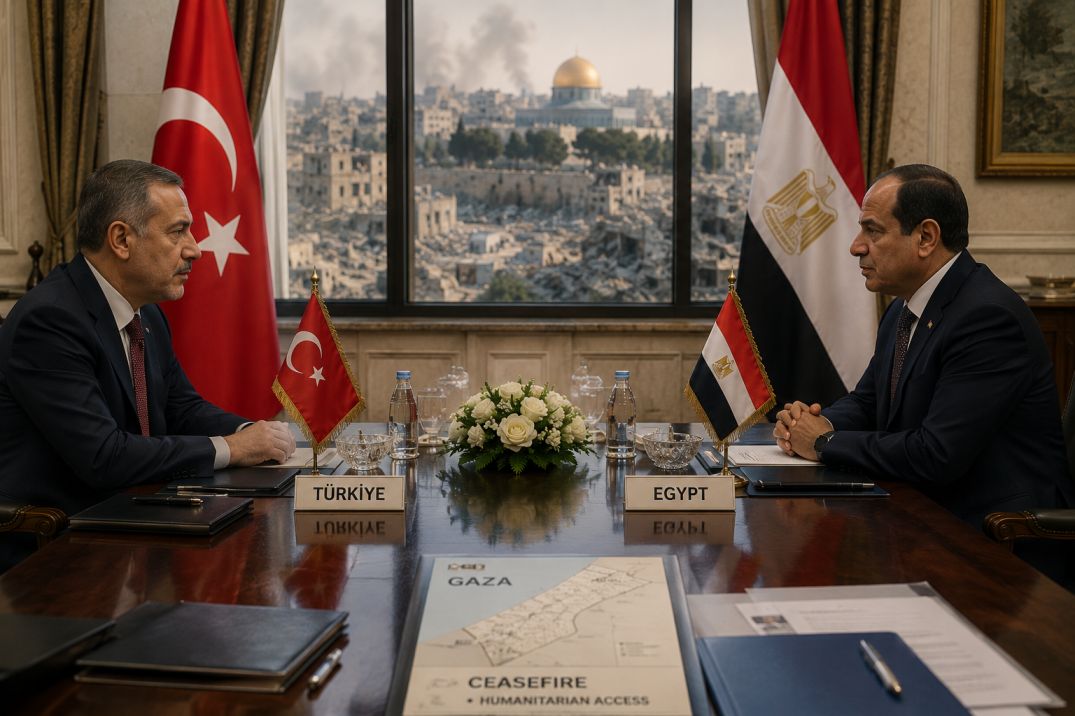
In a significant move to bolster regional security and diplomatic ties, Türkiye’s National Intelligence Organization (MIT) Director Ibrahim Kalın convened with Hassan Rashad, the head of Egypt’s General Intelligence Service, in Ankara on Monday. This high-level meeting centered on pivotal issues such as the Gaza ceasefire, bilateral cooperation, and overarching regional security matters. The dialogue signifies a deepening collaboration between Türkiye and Egypt as both nations seek to enhance their influence and stability across the Middle East and Africa.
A primary agenda item was the enactment of the second phase of the Gaza ceasefire deal. Turkish security officials disclosed that Kalın and Rashad reached a consensus on boosting coordination to counteract what they termed as Israel’s increasing breaches of the ceasefire. During the discussions, Kalın reiterated Türkiye’s unwavering support for the Palestinian populace, emphasizing Ankara’s commitment to providing ongoing assistance amid the persistent conflict.
The meeting also delved into broader regional dynamics, exploring avenues for expanded cooperation between the two countries. Key among these discussions was the pursuit of political reconciliation in Libya. Both intelligence leaders examined strategies to support the unification of Libya’s governing bodies and military factions from the eastern and western regions under a unified national framework.
Beyond Libya, Kalın and Rashad tackled security issues impacting other parts of the region, exchanging insights on the evolving situations in Somalia and the conflict in Sudan, which involves the Sudanese Armed Forces and the Rapid Support Forces. The discussions assessed the broader implications of these crises on regional stability, with both sides considering opportunities for sustained dialogue on mutual security concerns.
This dialogue underscores the strengthening alliance between Türkiye and Egypt following the reestablishment of diplomatic relations. As both governments aim to assume more prominent roles in resolving regional conflicts, ongoing intelligence cooperation is poised to be a key element in their collective efforts to foster stability, especially in Gaza and other areas grappling with enduring security challenges.