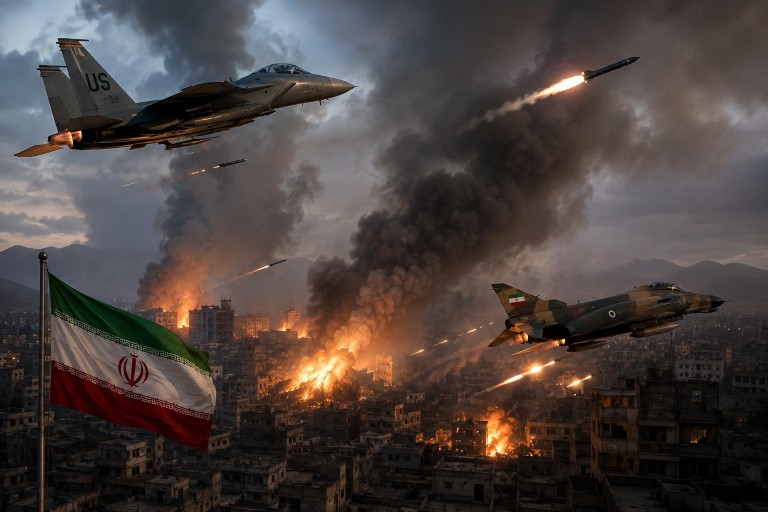
The Middle East is once again seeing heightened tensions as the United States and Iran engage in a fresh exchange of airstrikes. This recent escalation has sparked fears of a potential return to widespread hostilities in the region. The United States military launched strikes targeting facilities associated with Iran’s Islamic Revolutionary Guard Corps (IRGC). These actions were reportedly in retaliation for Iran’s attempted attacks on commercial vessels navigating the Strait of Hormuz and threats directed at American personnel.
In response, Iran initiated missile and drone assaults on US interests spread across multiple countries in the region, including Jordan, Bahrain, Kuwait, and Iraq. Jordan’s military reported intercepting 10 ballistic missiles that were fired from Iran, while three others landed in isolated areas without causing casualties or damage to the US military training site. Meanwhile, Iran claimed responsibility for attacks on a US base near Erbil in Iraq, and similar military activities were noted in Kuwait, with Bahrain experiencing air-raid sirens.
The security of the Strait of Hormuz, a vital channel for global oil transport, is now under increased scrutiny. The recent military actions have already led to a rise in oil prices. Iran has issued warnings that it might obstruct oil exports from the Gulf if the United States escalates its military or economic pressure. In Tehran, officials have denounced the US strikes and vowed retaliation. President Masoud Pezeshkian stated that Iran is ready to reciprocate if the US does not adhere to previous agreements aimed at de-escalating the conflict.
Amidst these tensions, there is a looming threat of further escalation, with both countries suggesting that additional attacks could provoke more severe responses. US President Donald Trump has issued a cautionary statement, indicating that a more vigorous response would follow any further Iranian offenses. In turn, Iranian authorities have expressed that they will defend their national interests through both military and diplomatic avenues.
This resurgence of military confrontation follows a period where the conflict had largely transitioned to economic measures, such as sanctions and blockades, rather than direct military engagement. The current surge in hostilities raises concerns that these strategies to manage the conflict might unravel, potentially leading to prolonged military engagements in the region once again.