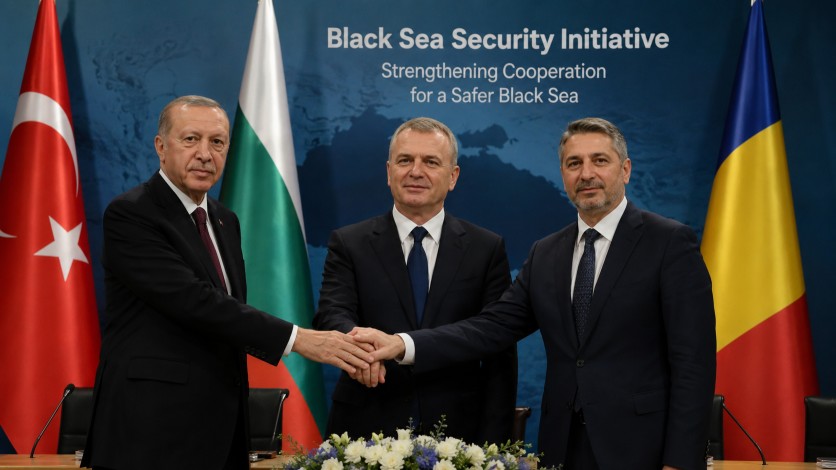
In a significant move to bolster security in the Black Sea region, Türkiye, Bulgaria, and Romania have agreed on a new memorandum that broadens their collective defense efforts. Announced during the NATO summit in Ankara, this updated accord extends the responsibilities of their joint security mission to not only focus on clearing naval mines but also to safeguard vital infrastructure. This includes energy facilities, telecommunications networks, and undersea pipelines, all of which are crucial to the region’s stability and economic health.
The trilateral mission originally came into being following the heightened security concerns spurred by the ongoing conflict between Russia and Ukraine. The Black Sea, a strategic area for commerce and energy, has seen increased risks due to this conflict. Since its inception, the joint task force has made significant strides, successfully neutralizing over 150 drifting naval mines. These efforts have been pivotal in enhancing maritime safety and securing the trade routes that are essential to the region’s economic activities.
By expanding their cooperation, the three nations aim to further secure essential energy projects in the Black Sea, an area where they all have substantial gas exploration and production operations. This enhanced focus on safeguarding energy and communication infrastructure underlines their dedication to regional stability and economic resilience. The memorandum represents a unified commitment from Türkiye, Bulgaria, and Romania to protect their shared interests and to address the evolving security challenges in the Black Sea.
This agreement not only demonstrates a robust defense strategy but also signifies a broader geopolitical stance, particularly in light of the threats posed by regional conflicts. With energy and infrastructure being at the core of their expanded mission, the countries are positioning themselves to effectively counteract any disruptions that may arise from the complex security landscape of the Black Sea area. This proactive approach ensures that critical infrastructure remains protected, thereby sustaining economic growth and security in the region.