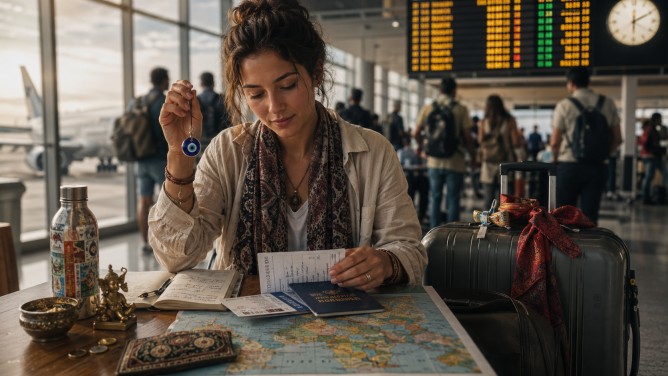
Traveling often brings with it a sense of anticipation and unique customs that imbue journeys with a special aura. Across the globe, various cultures embrace distinctive superstitions aimed at ensuring luck and safety while traveling. Despite their lack of scientific grounding, these rituals continue to be cherished by many, serving as a reflection of cultural identity and familial traditions.
One such belief is the use of garlic for protection. In the Balkans, a clove of garlic tucked into luggage is thought to ward off negative energy and the evil eye, shielding travelers from misfortune. Similarly, a common practice among some travelers involves touching or tapping the aircraft’s exterior before boarding. This gesture is not only seen as a harbinger of good luck but also provides comfort to those who may feel anxious about flying.
Stepping onto an airplane with the right foot is another ritual that holds significance for certain travelers. This act of starting a journey “on the right foot” is considered a positive omen, inviting good fortune. In the Middle East and the Balkans, families may pour or sprinkle water behind departing travelers, symbolizing a smooth and safe journey with hopes for the traveler’s safe return.
Numerical associations also play a role in travel superstitions. For instance, the number 13 is commonly avoided in Western cultures due to its association with bad luck. In China, the number 4 is typically shunned because it sounds similar to the word for death. Meanwhile, in Italy, the number 17 is traditionally viewed with apprehension. These beliefs often influence decisions related to hotel room assignments, building floors, and other travel-related aspects.
Other travel customs include a Slavic tradition of sitting quietly on packed luggage before embarking on a journey, allowing for a moment of introspection and mental preparation. Additionally, in some cultures, it is deemed unlucky to sweep the floor immediately after a traveler departs, as it is believed that doing so might sweep away the person’s good luck or hinder their safe return. While these traditions may be seen as mere superstitions, they continue to enrich the travel experience, adding layers of meaning and connection to the act of journeying.